Definition
The suffix '-ectasis' refers to dilation of a tubular structure - in this case, the bronchii. For bronchiectasis to occur, two factors need to be present:
1. Infection
2. Impaired ability to clear the infection
These two features will help us generate a list of possible causes for this disease. Bronchiectasis is a chronic obstructive disorder that shares some similarities with COPD - obstructive pattern on PFT, recurrent inflammatory flares requiring hospitalization, and some benefit from inhaled bronchodilators.
Etiology
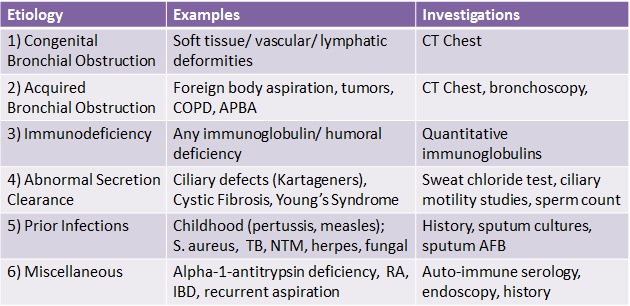
There is broad list of conditions that can lead to bronchiectasis:
The diagnosis of bronchiectasis can be established on the basis of clinical symptoms and radiography alone. Classic symptoms include chronic cough and copious thick sputum production for months to years. Additional symptoms are less common, including shortness of breath, hemoptysis, pleuritic chest pain, and wheezing. These chronic symptoms are punctuated by recurrent episodes of infection requiring antibiotic therapy.

Radiologically, the classic findings on chest x-ray include linear atelectasis, dilated airways which may appear as tram lines, and peripheral opacities representing mucopurulent plugs. On CT Chest, findings include airway dilation (1.5x greater in diameter than an adjacent vessel), bronchial wall thickening, tree-in-bud pattern due to mucopurulent plugs accompanied by post-obstructive air trapping in the small airways, and bronchial wall cysts.

Investigations
Aside from the above mentioned chest x-ray and CT chest, other important investigations include sputum cultures and pulmonary function testing. Outside of these, the remainder of the investigations should be targeted at determining the underlying etiology of bronchiectasis. See above for details.
Treatment
Of all the causes of bronchiectasis, only a few have treatments that have shown benefit (some immunodeficiencies, nontuberculous mycobacterial infection, APBA, recurrent aspiration, rhematologic disease). Instead of aiming to treat the underlying cause, the treatment for bronchiectasis is targted at three things:
1. Controlling infection - Using antibiotics during acute flares that are tailored to prior sputum cultures is an important aspect of therapy. This may include coverage for Pseudomonas. Vaccination is also important in preventing future devastating infections.
2. Reducing inflammation - Using inhaled and systemic steroids in select patients during and in between exacerbations may help reduce secretions and wheezing. This may also include prolonged use of antibiotics for their anti-inflammatory effects (eg. macrolides) in those who have recurrent exacerbations.
3. Improving bronchial hygiene - For all patients, this is an important aspect of therapy that aims to control secretions. It includes pulmonary physiotherapy, postural drainage,
Surgery of affected lung and transplantation is reserved for those who are refractory to medical treatment.
References:
Click here for the NEJM review from 2002.
References:
Click here for the NEJM review from 2002.


