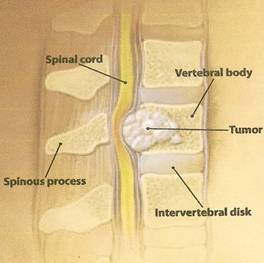
Today we discussed myelopathy (i.e. spinal cord pathology)
Features to suggest myelopathy:
-bilateral motor and sensory signs or symptoms not involving the head
-weakness, spasticity, hyperreflexia (although may see hyporeflexia acutely)
-sensory findings with a descrete level
-bowel and bladder involvement
Causes of myelopathy:
1) Compression- herniated disc, tumor (extramedullary or intra-medullary) most common. Epidural abscess (often st. aureus). Also consider in conditions with c-spine instability like Down's and rheumatoid arthrititis
2) Inflammatory- MS; typically incomplete. SLE- usually incomplete, within a vascular territory (i.e. transverse myelitis), CNS vasculitis
3) Metabolic- subacute combined degeneration (i.e. dorsal column and corticospinal tract)- ddx is B12 deficiency and tabes dorsalis (syphilis)
4) Infectious- cord itself: syphilis, HIV, HTLV (esp in Caribbean), VZV. Surrounding structures causing compression: epidural abscess, vertebral osteomyelitis (bacterial, mycobacterial or fungal)
5) Vascular- cord infarction- rare (can be seen in aortic dissection or hypercoagulable state), AVM- very rare.
6) Genetic- Devic's (optic neuritis, myelopathy only- probably variant of MS)
Link:
Click here for a NEJM review paper by UHN physicians on cervical radiculopathy and myelopathy
